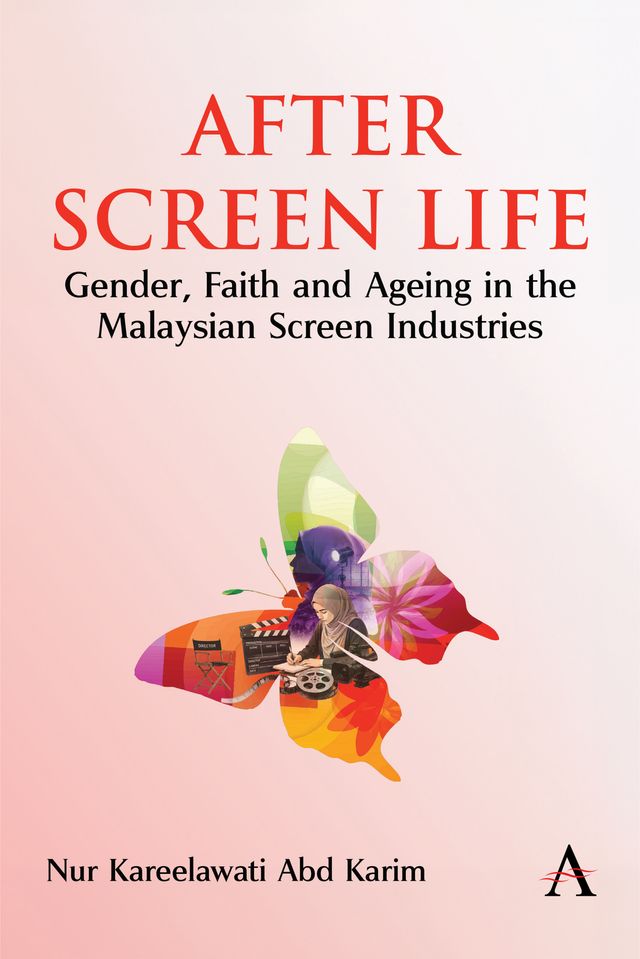
Explores how gender, faith, ageing and family responsibilities shape the careers of Muslim women in Malaysia’s screen industries, offering a critical Global South perspective on creative labour, inequality and the future of media work.
After Screen Life: Gender, Faith and Ageing in the Malaysian Screen
Industries explores the often-hidden experiences of women who work behind the screen in Malaysian film, television and digital production. While screen industries are frequently celebrated as creative, glamorous and future-facing, the labour that sustains them is shaped by unequal power relations, insecure work, long hours, gendered hierarchies and the pressure to remain constantly adaptable. This book asks what happens to women’s creative lives as they age within such conditions.
Centred on the Malaysian context, the book foregrounds Muslim women’s experiences while also situating them within broader debates on gender, care, religion, creative labour and screen industry transformation. It examines how faith is lived not simply as doctrine, but as an ethical resource, a source of resilience and sometimes a structure through which women negotiate respectability, professional conduct and workplace boundaries. Ageing is treated not as decline, but as a complex life-course condition shaped by family responsibilities, accumulated expertise, industry memory, bodily limits and the desire to continue contributing meaningfully.
Combining personal reflection, interview-based insight and critical engagement with production studies, feminist media studies, Islamic ethics and de-Westernising creative labour scholarship, After Screen Life offers a timely intervention into how screen work is organised, valued and remembered. It challenges policymakers, educators and industry leaders to think more seriously about the sustainability of creative careers, the visibility of older women and the need for more humane production cultures in Malaysia and across Southeast Asia.