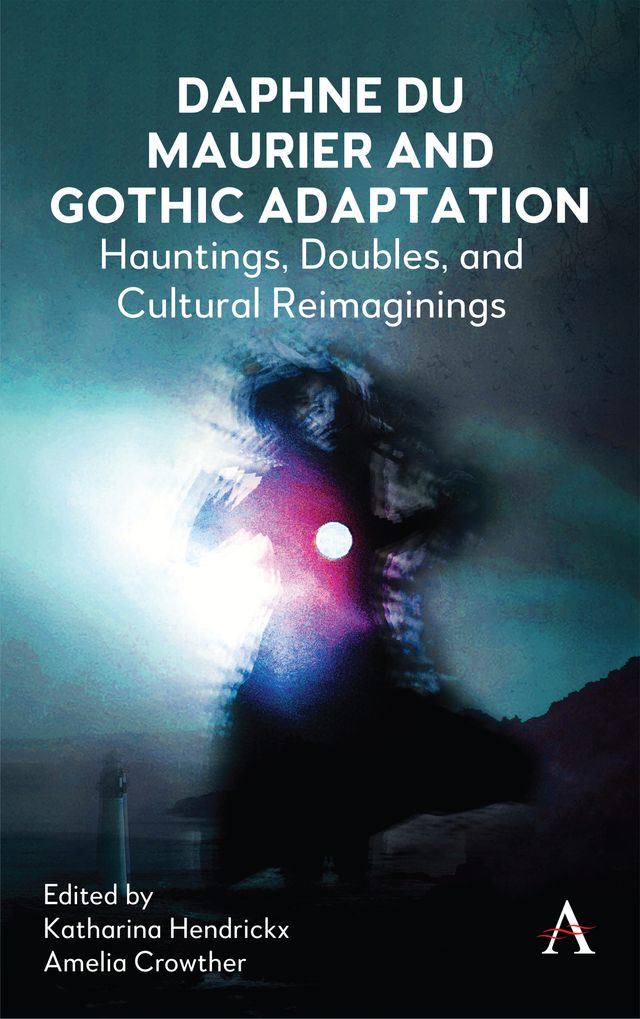


Edited by Katharina Hendrickx and Amelia Crowther
ISBN: 9781801361071
Pages: 250
Pub Date: March 2027
Imprint: Anthem Press
‘We are all ghosts of yesterday, and the phantom of tomorrow awaits us alike in sunshine or in shadow, dimly perceived at times, never entirely lost’, wrote Daphne du Maurier in her 1978 autobiography Myself When Young: The Shaping of a Writer. Here, du Maurier’s words not only reflect the Gothic essence of her work, her authorial fascination with hauntings, the uncanny, doubles, returns and irresolution but also anticipate her legacy, how her work continues to haunt the cultural landscape almost a century after her first publication. While scholarship has long been attentive to du Maurier’s own writing, this collection is dedicated to her ever-evolving legacy, interrogating the ways in which du Maurier’s work has been doubled, reimagined and transformed through adaptation and how each new iteration remains in haunting dialogue with its predecessors.
Collectively, the chapters in this collection are dedicated to exploring the far-reaching influences of du Maurier’s work on popular culture. They analyse adaptations of du Maurier’s most famous novels and short stories, including Rebecca, Jamaica Inn, The Scapegoat, ‘The Birds’ and ‘Don’t Look Now’, created for literature, film, television, musical theatre, opera and beyond, throughout the twentieth century and into the twenty-first. In doing so, they consider how the Gothic tropes central to du Maurier’s fiction, including female doubles and dangerous landscapes, have been continually revised and reimagined for different audiences, engaging with the anxious development of discourses around morality, feminism, postcolonialism, queerness and climate catastrophe. Alongside analyses of more traditional adaptations, select chapters also consider how du Maurier’s work has influenced popular texts more widely and how du Maurier’s work is consumed in current commercialised and touristic Gothic forms.
This interdisciplinary collection thus contributes to vital investigations into the evolution of the female Gothic over the last century. And by focusing on adaptation, these interrogations are particularly concerned with the Gothic’s investment in unresolved cultural issues, exploring how they are continually re-awoken and reworked within new socio-political contexts. Moreover, the volume seeks to reveal and explore the implications of adaptation as a distinctly Gothic process, inextricably intertwined with hauntings, doublings and transformations.