

Adrian Anagnost
ISBN: 9781839998669
Pages: 174
Pub Date: September 2026
Imprint: Anthem Press
Explores how global contemporary art has shifted from 1990s globalization to today’s fractured landscapes of rootedness, using documenta fifteen to trace changing artistic solidarities, politics, and infrastructures.
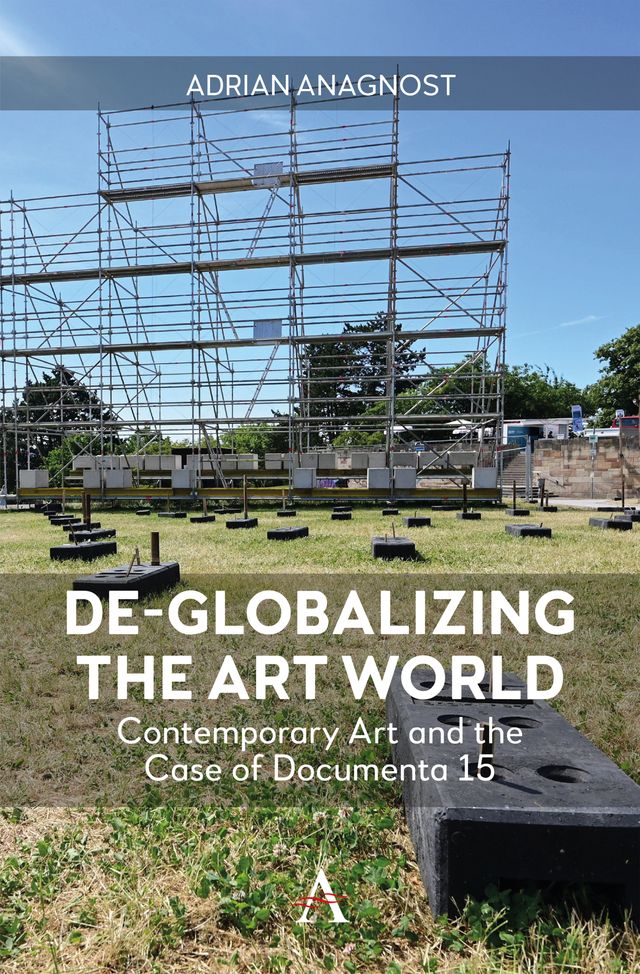
De-globalizing the Art World charts the shifting terrain of contemporary art, from the ambitious internationalism of the 1990s to the fractured, contested landscapes of the 2020s. At its center is documenta fifteen, curated by the Indonesian collective ruangrupa, whose lumbung model sought to reimagine artistic infrastructure around resource-sharing and collectivity. While celebrated globally, the exhibition also became the site of fierce controversy in Germany, revealing how postcolonial critique collided with national memory politics and entrenched debates on antisemitism.
The book situates documenta fifteen within a longer history of biennials, mega-exhibitions, and collective practices, while tracing the insufficiencies of these models for grappling with cultural infrastructures in politically fractured contexts. This book highlights how cultural infrastructures from Jakarta to Ramallah navigated NGOization, donor regimes, and financialized economies. By pairing close analysis of Indonesian and Palestinian art worlds with German debates (especially those of the Antideutsche), this book reveals documenta fifteen as a crucible for broader questions about globalization, memory politics, and the contradictions of collective art-making today.
Drawing on curatorial theory, political economy, and cultural infrastructures, this book shows how the art world has shifted from expansive visions of transnational solidarity to a more fraught politics of rootedness, identity, and site-specific belonging. De-globalizing the Art World provides a critical lens for understanding contemporary art’s role in broader debates on globalization, decolonization, and the limits of collectivism in a de-globalizing world.