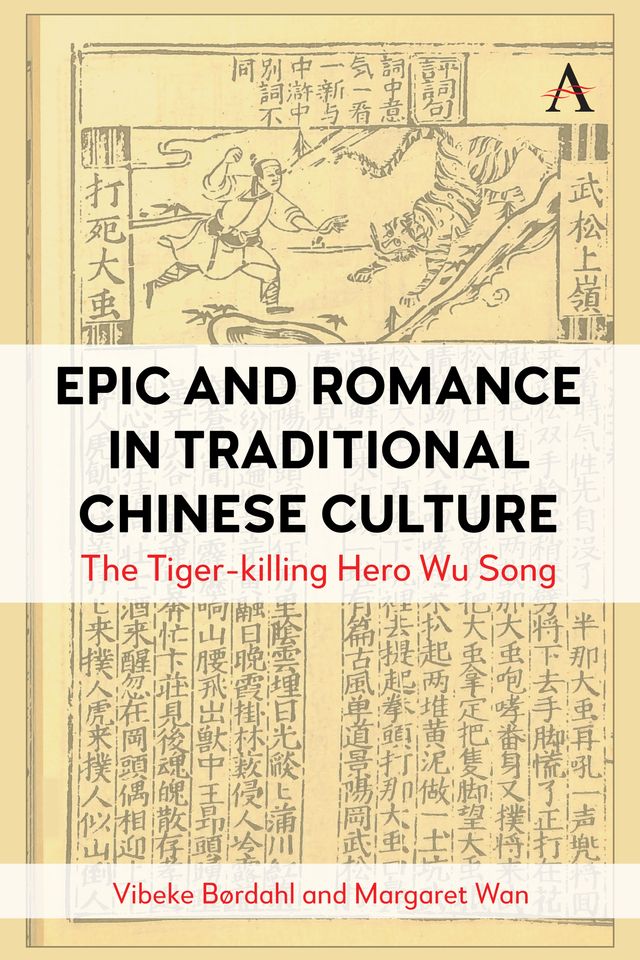


Vibeke Børdahl and Margaret Wan
ISBN: 9781839999222
Pages: 180
Pub Date: August 2027
Imprint: Anthem Press
A collection of enjoyable tales about the famous hero Wu Song traced across centuries through drama, balladry, song, and storytelling.
Living oral tradition has transmitted the saga of the hero Wu Song for more than 700 years; it has served as a touchstone, a common cultural reference point across China’s vast geography, down to the present day. For centuries, men and women, young and old, elites and commoners, all knew of the man who killed a tiger with his bare hands, avenged his brother’s murder, and joined a band of “righteous” outlaws. His legend has circulated in many genres—novels, plays, ballads, and oral performances of many kinds. It was known, adapted, and repurposed at all levels of society and invested with a range of meanings and functions.
This volume provides a sampling of the range of genres in which the tale of Wu Song flourished – from written genres to performance-related texts to oral performance. While each of these excerpts centers on Wu Song killing the tiger, the ‘same’ story is told in very different ways. Some versions portray him as the embodiment of a peerless hero of strength and virtue; others complicate his characterization by questioning his imperviousness to sexual temptation or his “righteous” use of violence.
It is fascinating to note that, despite the importance of the textual versions of the story, many performance traditions have transmitted the legend of Wu Song independently to this day. In other words, the vast majority of oral performances and even performance-related texts are not “adaptations” that depend on the novel or earlier plays, but creations that retell the legend in the manner of their specific, often regional, genre.
As a widely known heroic tale that has been transmitted in oral performance for centuries, the story of Wu Song provides an important point of comparison with Western epics. No Indigenous term for “epic” exists in Chinese. China’s literary history took a different course than the West, and no works held a comparable position to the Illiad and the Odyssey. Instead, China had more than a hundred forms of performance art that are collectively called “singing and telling arts” (shuochang yishu). Long, heroic, oral performance art existed in Han Chinese culture for centuries in the form of storytelling (shuoshu) and some ballads. The circumstances of learning, transmitting, and performing these tales show similarities with epics in other cultures. Thus, considering the many Wu Song tales in their respective social and historical settings contributes to our understanding of the meaning of epic in a global context.
This collection gives readers, scholars, and students a first-hand feel for the vibrant variation evident in the Wu Song story and the intricate interplay between the oral and the written traditions.