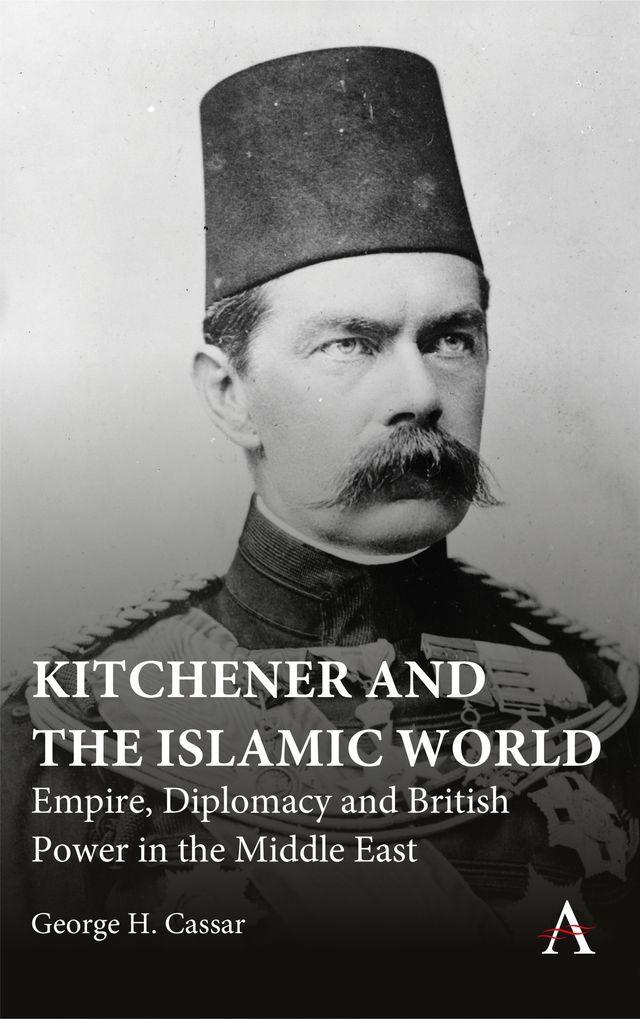


George H. Cassar
ISBN: 9781801362139
Pages: 200
Pub Date: February 2027
Imprint: Anthem Press
Several years after Kitchener graduated from the Royal Military Academy as an engineer, he was posted to the Levant to work as a scientific surveyor in Palestine. He undertook similar work in Cyprus before deciding to join the Egyptian army. His arrival in Cairo coincided with a rapidly growing rebellion in the Sudan, led by a religious fanatic who gave himself the title of “Mahdi.” The Sudan had been under the control of Egypt for half a century but the anti-imperialist British government under Gladstone dragged its feet for months before public pressure calling for action compelled it to send an army to relieve Khartoum. By the time the relief force arrived on the scene, it was too late. Two days earlier, the dervishes had stormed the walls of the city, massacred the remaining Egyptian garrison, and engaged in an orgy of rape and destruction. Kitchener had preceded the expedition as a guide and he was devastated when he heard the news. He received a second blow when Gladstone ordered the withdrawal of troops from the Sudan. He was so enraged that he resigned from the Egyptian army and returned to England.
During the many months that followed, Kitchener’s hard work and talent in tackling challenging assignments were acknowledged and he rose rapidly in the army. His latest task took him back to Egypt and in April 1892, he was appointed Sirdar or Commander of the Egyptian army. In the spring of 1896, the Salisbury government ordered Kitchener to begin the process of reconquering the Sudan, a task he eventually completed after destroying the main dervish army on September 2, 1898. After the many years of Mahdist misrule and destruction, Kitchener faced a daunting challenge in trying to move the country forward. He remained in the Sudan about a year before he was sent to undertake new duties, first in the Boer War and later in India.
Kitchener returned to Egypt in 1911 as British Agent and, while maintaining a firm grip over the country, pushed forward a wave of reforms that advanced the nation’s material prosperity. His period in Egypt ended during the first week in August 1914 when Britain declared war on Germany and he was appointed Secretary of War. Although Kitchener’s focus was primarily on the Western Front, he was able to enlist the support of the Hejaz by dishonest means which eventually affected the relationship between the two sides long after the war ended.