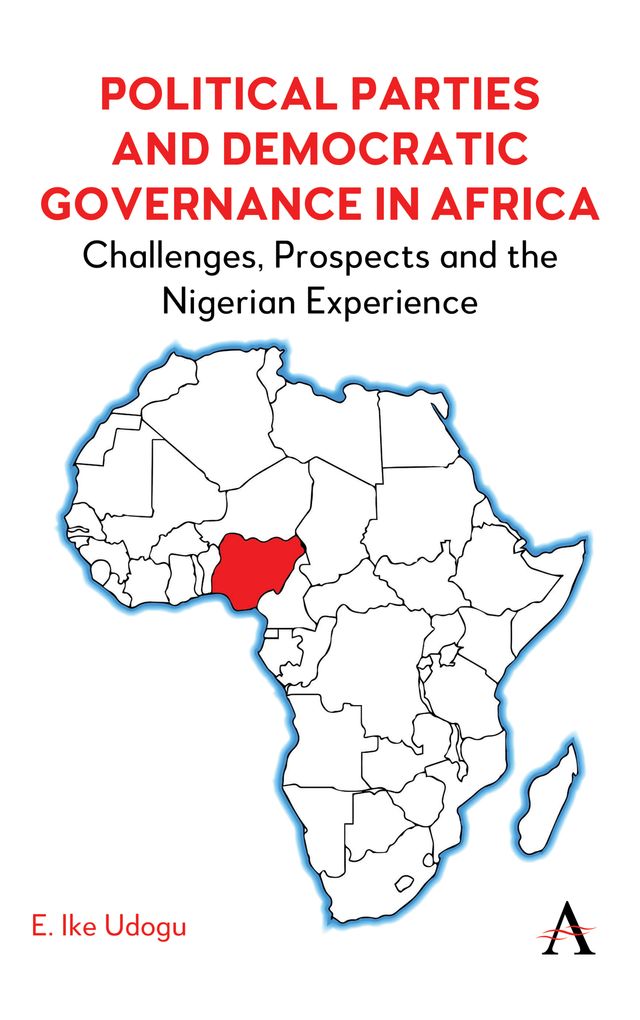
E. Ike Udogu
ISBN: 9781801362313
Pages: 200
Pub Date: February 2027
Imprint: Anthem Press
Political Parties and Democratic Governance in Africa: Challenges, Prospects and the Nigerian Experience examines the significant challenges political parties pose to sustaining democracy in Africa, set against the region’s recurring political, economic, and social dilemmas. Although Africa is the world’s richest continent in terms of untapped natural resources and human capital, democracy, political stability, and development across the continent remain stagnant. Africa is at the crossroads in this century. This realization prompted the African Union to launch its ambitious and promising AU Agenda 2063—the Africa We Want—project to promote democracy, political stability, and economic growth that could catapult the continent to greater heights developmentally. One of the major concerns that academics and civil society organizations are tackling is how to create an enabling environment that would make the continent stable and attractive to investors. And one of the strategies is that of political parties producing efficacious democracy and good governance. Political parties are critical in democratic systems. In modern Africa, however, politicians frequently align their political parties around group interests with little emphasis on ideology and national interests. So, political parties are not adhering to the core principles of democracy—respect for the rule of law, free and fair elections, protection of basic human rights, transparency and accountability, freedom of the press, inter alia, during political contests. This book traces the history of political parties in Africa during the pre- and post-independence eras in the development of democracy. It highlights the difficulties that these political parties confronted in attempts to adjust the borrowed governance architecture in Europe to African milieus and cultures. To illustrate the challenges that political parties pose to the consolidation or deepening of democracy in Africa, this volume in part features the Nigerian experience given its population and moniker as the Giant of Africa. It briefly examines the role of political parties since independence in 1960 but focused on the challenges political parties confronted in specific electoral contests in Nigeria since the return of democracy in the Fourth Republic in 1999. Finally, the book renders recommendations on how political parties by way of patriotism can deepen democracy in Nigeria and serve as a model for Africa.