

Siseko H. Kumalo
ISBN: 9781801361460
Pages: 200
Pub Date: May 2027
Imprint: Anthem Press
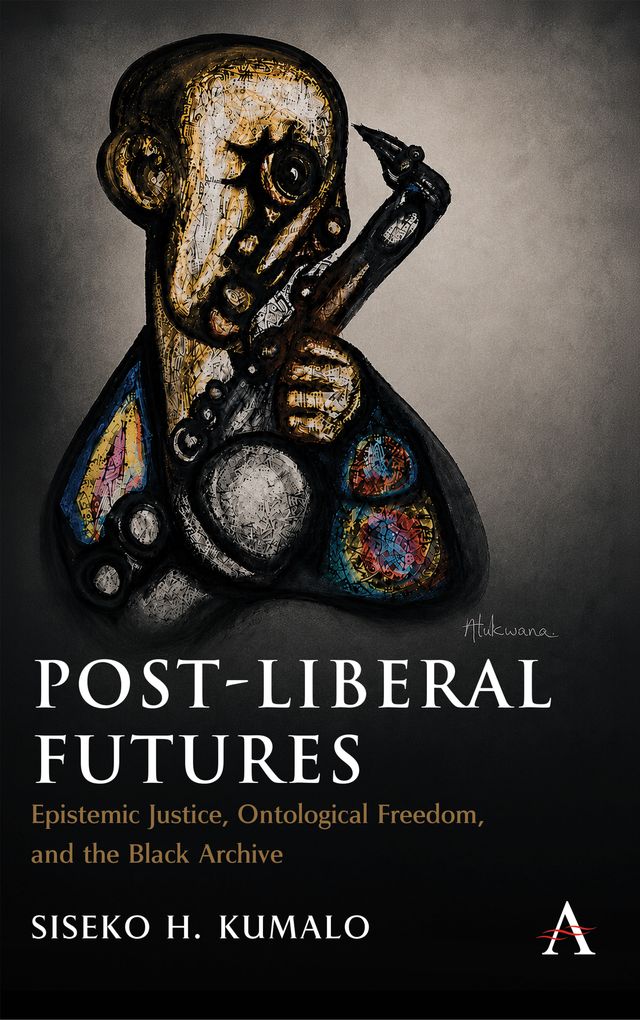
Post-Liberal Futures: Epistemic Justice, Ontological Freedom and the Black Archive offers a sustained philosophical interrogation of liberalism as both a political project and an epistemic framework, arguing that its universalist commitments are structurally unable to secure non-domination, recognition and justice in postcolonial contexts. Taking South Africa as its primary site of analysis, the book examines the enduring juridical paradox in which customary law is simultaneously recognised by and subordinated to constitutional authority. This tension is not treated as a contingent problem of legal pluralism, but as evidence of a deeper crisis internal to liberal thought – one that reveals the limits of its claims to neutrality, universality and epistemic inclusivity. In this respect, the work situates the contemporary university and the broader knowledge project within what may be understood, following critiques of institutional meaning, as operating amid the ruins of liberal reason.
Against this backdrop, the book advances the Black Archive as both a conceptual intervention and an institutional method. Rather than treating African intellectual traditions, Indigenous languages, literature and aesthetic forms as objects of study, it positions them as sites of theory in their own right. Through sustained engagement with figures such as William Wellington Gqoba and S. E. K. Mqhayi, the book reconstructs alternative modes of reasoning grounded in relational ontologies and coeval epistemologies. It shows how these traditions not only contest the epistemic hierarchies of the academy but also provide resources for rethinking foundational political concepts such as democracy, justice and belonging beyond liberal paradigms.
The book ultimately develops a post-liberal account of democratic life grounded in practices of repair, relationality and epistemic plurality. It argues that the task is not to extend or diversify liberalism, but to think from its limits by taking seriously the intellectual resources that have been historically excluded or subordinated. In doing so, Post-Liberal Futures offers both a philosophical framework and a programmatic orientation for reconstituting knowledge, pedagogy and institutional life, positioning the Black Archive at the centre of the project to build more just and contextually responsive futures.