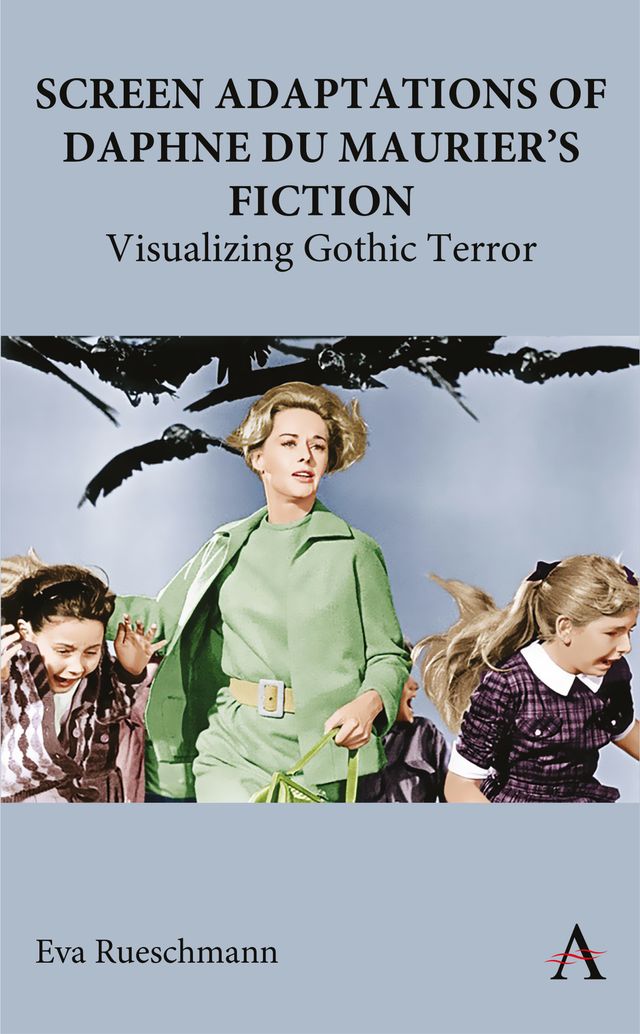


Eva Rueschmann
ISBN: 9781801362405
Pages: 180
Pub Date: April 2027
Imprint: Anthem Press
Explores how film and television adaptations of Daphne du Maurier’s fiction reinterpret her Gothic thrillers through themes of gender, identity, class, and violence, revealing their enduring relevance and cinematic appeal.
Part of the new Anthem Studies of Writers and Film series, this book explores feature film adaptations of major literary works by popular British writer Daphne du Maurier (1907–1989). A prolific author of Gothic suspense thrillers, Daphne du Maurier’s work has always been enormously popular with her readers. In the past two decades, scholars have reassessed her considerable craft as a writer of Gothic tales in the vein of Wilkie Collins and the Brontës—and rediscovered her as a writer who deftly employed Gothic conventions to explore complex gender identities, domestic violence, and even the impact of war and environmental horrors. Her highly visual writing style and the influence of her theatrical family on her storytelling made her books a natural choice for feature films, beginning with Alfred Hitchcock’s Jamaica Inn (1939), to the contemporary screen versions of Rebecca (2020) and My Cousin Rachel (2017). Indeed, the many film and television adaptations have kept interest in du Maurier’s work alive and have created new audiences for her literary work.
The first comprehensive study of Daphne du Maurier’s literary fiction on screen covers a range of fascinating directors, actors, periods, and locations. Daphne du Maurier's earliest and most frequent collaboration was with Alfred Hitchcock, who adapted her novel Jamaica Inn in 1939 as his last British-made film. Following this, he teamed up with Hollywood director David O' Selznick to film du Maurier's most famous novel, Rebecca. This film won the Academy Award for Best Picture in 1940 and remains a widely read literary classic to this day. Hitchcock’s 1963 adaptation of du Maurier’s terrifying short story “The Birds” anticipated the psychological horror of Don’t Look Now (1972), adapted from another du Maurier short story by avant-garde British director Nicolas Roeg. Contemporary variations of two darkly atmospheric, haunting novels round out this study’s discussions of the most significant adaptations of her fiction: Charles Sturridge’s 2012 version of The Scapegoat, a suspenseful psychological thriller of the Gothic Double, and Roger Michell’s 2017 My Cousin Rachel, starring Rachel Weisz, a new version of the novel previously filmed in 1952 with Richard Burton and Olivia de Havilland.
This study situates adaptations of Daphne du Maurier's fiction within the theoretical framework of hauntology, exploring how her narratives persist as spectral presences across film and television. Drawing on Derrida's conception of the specter as that which disrupts linear temporality, the book argues that adaptations of du Maurier are haunted not only by the Gothic atmospheres of the original texts but also by the cultural, historical, and medial traces that carry forward. The book traces how du Maurier's Gothic imagination re-emerges in new cultural moments as both ghostly echo and critical disruption. From Hitchcock's Rebecca and The Birds to later film and television adaptations, du Maurier's texts haunt the very media that attempt to contain them. Exploring memory, repetition, and absence, this study reveals adaptation itself as a haunted practice, where du Maurier's fictions live on as restless revenants, shaping how we read the Gothic across generations. Rescuing du Maurier from the limiting label of popular “romantic novelist,” the book looks closely at recurring critical issues in her fiction and their film versions, focusing on themes of social role-playing and acting; gender, sexual identity, and class identities; and the impact of history and past traumas on memory, perception, and fantasy.