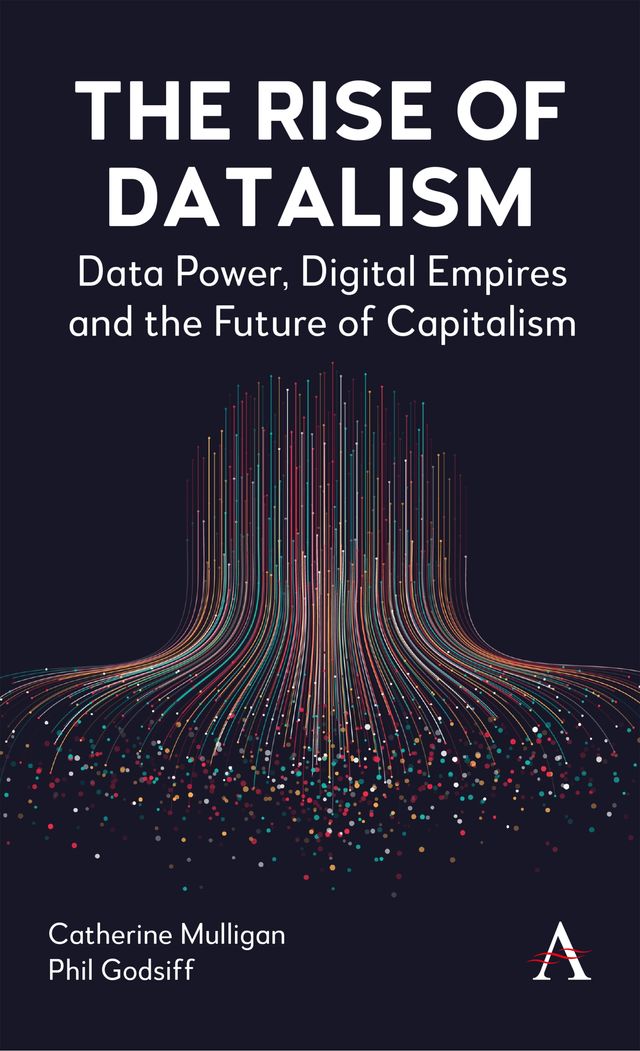


Catherine Mulligan and Phil Godsiff
ISBN: 9781801361873
Pages: 200
Pub Date: March 2027
Imprint: Anthem Press
Argues that the digital age is giving rise to ‘datalism’, a new paradigm in which data and human experience, rather than physical resources, become the dominant sources of power and profit, fundamentally reshaping economies, labour markets, and systems of global governance.
This book offers a compelling and original account of one of the most profound transformations of our time: the shift from capitalism to a new system in which data are the central source of power and value. In this emerging order, economic activity is no longer primarily organised around the ownership of factories or physical resources, but around the ability to collect, process and control vast amounts of data generated by individuals, organisations and societies.
The book argues that this transformation is not simply an extension of capitalism, but a structural shift. Platforms, artificial intelligence systems and digital infrastructures have created a new form of economic organisation in which human activity – our clicks, movements, creativity and interactions – becomes the raw material of production. Yet unlike traditional labour, this contribution is largely invisible, unrecognised and uncompensated. As a result, power is increasingly concentrated in the hands of those who own and control data, reshaping markets, labour relations and competitive dynamics.
Combining historical analysis with contemporary case studies, this title traces how this system emerged, from the early days of digital platforms to the rise of global technology giants and AI-driven economies. It examines the implications for democracy, inequality and global power, highlighting how data have become a key geopolitical asset. At the same time, the book explores the possibilities for resistance and reform, from new regulatory approaches to alternative models such as data commons and public-interest AI.
Accessible yet rigorous, this book provides readers with the language and framework to understand a world in transition – and challenges them to consider what kind of digital future we want to build.