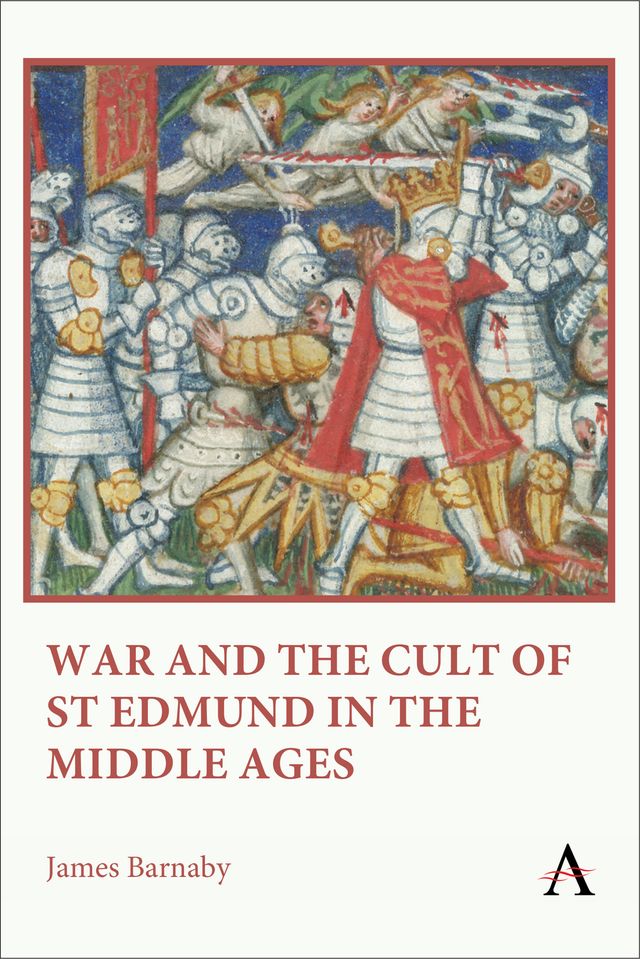
Explores how the cult of Saint Edmund of Bury evolved from that of a peaceful martyr to a warrior saint, and how it was invoked in medieval warfare, political conquest and the crusading movement from the ninth to the fifteenth centuries.
Saint Edmund the martyr was one of the most important saints of Medieval England. King of East Anglia c.855–869, Edmund was killed when the Great Heathen Army invaded his lands. His death however was only the beginning of his story. After his death, Edmund performed many miracles and his cult was established at Beodericsworth, which was renamed as Bury St Edmunds in his honour.
An important aspect of Edmund’s cult is the development of his personality in the hagiography. In the early texts, Edmund is depicted as a man of peace, who chose to follow Christ’s example and die as a martyr instead of fighting the enemy. By the later Middle Ages, however, Christian views of warfare had changed. Being a good Christian was no longer the antithesis of being a successful warrior, and this shift is mirrored in St Edmund’s cult.
This book analyses the changing nature of Edmund’s cult through an investigation of the hagiography in conjunction with the material culture of the cult. The book explains how Edmund was adopted in England and used to advance the military aims of English kings, as well as how he was deployed by Englishmen in the crusades.