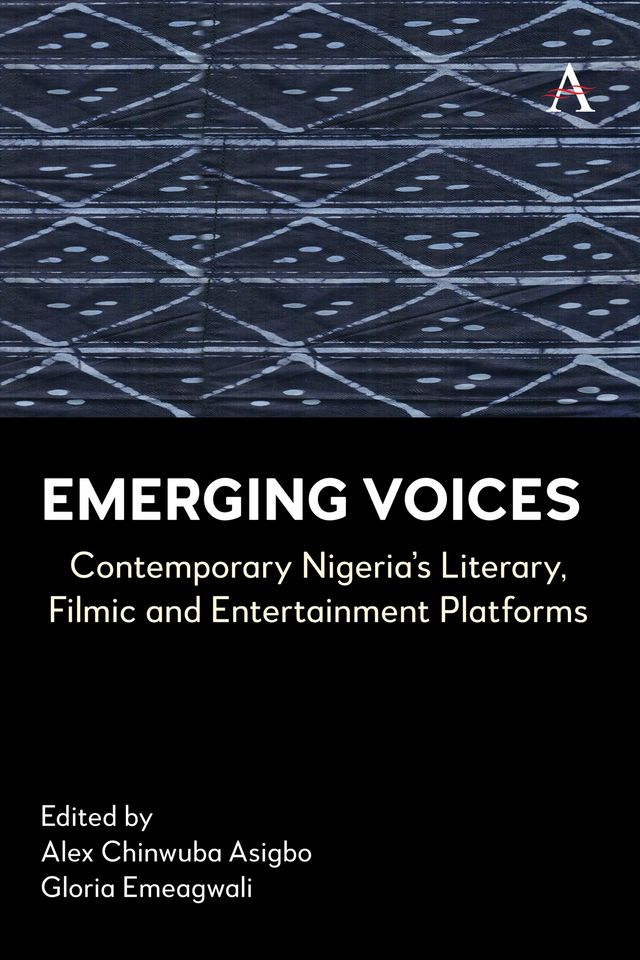


Edited by Alex Chinwuba Asigbo and Gloria Emeagwali
ISBN: 9781839998515
Pages: 200
Pub Date: October 2026
Imprint: Anthem Press
Explores how contemporary Nigerian theatre, literature, film, music, and digital platforms confront the status quo, express postcolonial identity, and foster cultural and political discourse
Emerging Voices on Nigeria’s Literary, Filmic and Entertainment Platforms offers a groundbreaking exploration of contemporary Nigerian creativity. This edited volume brings together fresh, scholarly perspectives on how a new generation of writers, filmmakers, musicians, and artists is reshaping the cultural landscape. From dissecting the revolutionary narratives in Chimamanda Ngozi Adichie’s Purple Hibiscus and the radical scenography of Dele Odule’s theatre, to analyzing the potent socio-political commentary in Nollywood and the Afrobeat revolution of Fela Kuti, this book covers vast intellectual terrain. It boldly tackles urgent issues such as gender ideology, marital violence, the Niger Delta struggle, and the global influence of Nigerian soft power. Essential reading for scholars of African studies, media, and postcolonial literature, this collection signals a vibrant and critical new direction in understanding Nigeria’s powerful and evolving artistic voice. This edited collection serves as a critical intervention in the discourse on contemporary Nigerian culture. Edited by Alex Chinwuba Asigbo and Gloria Emeagwali, the volume assembles a cadre of scholars to interrogate the dynamic intersections of literature, film, theatre, and music within the Nigerian context. Structured into two thematic sections—“Gender, Power and Cultural Resistance” and “Entertainment, Education and Nation-Building”—the chapters engage with a diverse range of primary sources. The analysis spans from the literary fiction of Olu’Dolapo and Stephen Inegbe to the cinematic narratives of Nollywood and Dan Kpodoh; from the revolutionary theatre of Dele Odule and James Heritage Umana to the musical legacies of Fela Kuti and modern-day artistes. By prioritizing emerging critical voices and contemporary subject matter, including the reception of African culture on Netflix, this book provides an indispensable resource for understanding the complexities, resistances, and innovations that define modern Nigerian artistic production and its role in national and global dialogues.