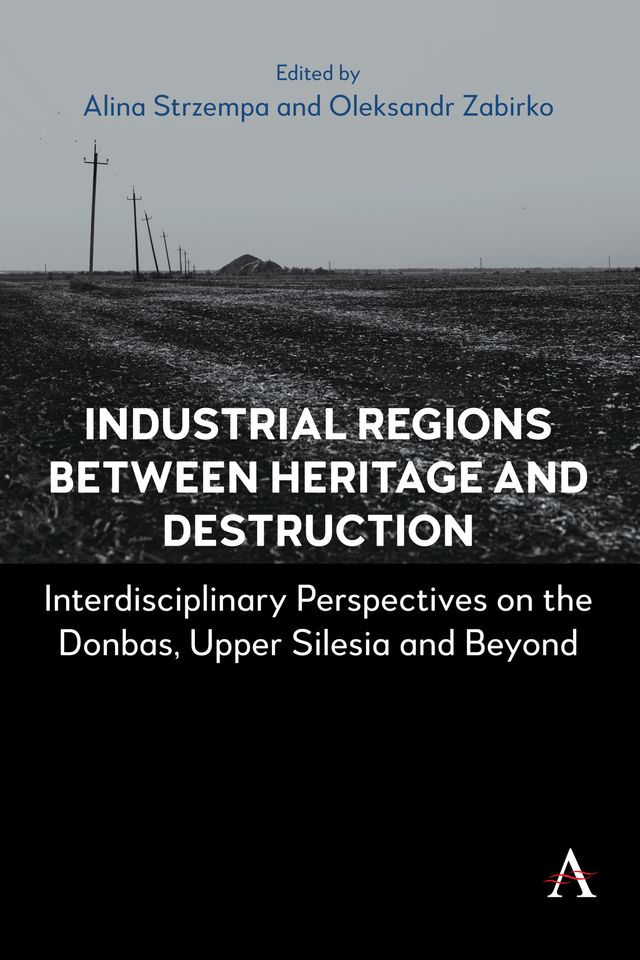


Edited by Alina Strzempa and Oleksandr Zabirko
ISBN: 9781801361026
Pages: 300
Pub Date: February 2027
Imprint: Anthem Press
This conference proceedings brings together scholars from various disciplines to examine transitions in Europe’s industrial regions—shaped by gender, heritage, migration, memory, and other factors—offering interdisciplinary perspectives on cultural transformation in historic industrial borderlands, particularly Upper Silesia and the Donbas.
The first section, “Conceptual Frameworks: Interdisciplinary Approaches to Comparing Industrial Regions” introduces two conceptual approaches that explore the historical trajectories and socio-political dynamics of industrial spaces across academic disciplines. The second section, “Traditions and Transitions: Questioning Social Formations in Post-Industrial Regions,” investigates shifts in socially gendered roles after the Soviet Union’s collapse. The comparison between Polish Upper Silesia and the Ukrainian Donbas proves particularly insightful in relation to “traditional values” as social imaginaries. The third section, “Identity Crises: From Industrial Heritage to Separatism and Migration,” explores contested identities and narratives amid deindustrialization and war. The comparative focus between Silesia and the Donbas highlights the political instrumentalization of deindustrialization. In the Donbas, this process had especially severe consequences. One contribution examines post-1991 discursive shifts through the lens of displaced residents and changing regional ties. The fourth section, “Borderland Literary Narratives in Old Industrial Regions,” examines how Upper Silesia’s industrial and borderland identity is reflected in literature, offering insight into collective memory and place-based identity. The next section, “Environmental Footprints of Nuclear and Coal Legacies,” focuses on the environmental impact of extractivism in Central and Eastern Europe. With the glorification of industrialization receding, contributors revisit overlooked commemorative practices since the 1990s and propose humanities-based approaches to addressing extractive legacies. In “Transitioning Workers’ Life-Worlds,” attention shifts to fossil fuel workers and those whose lives conflicted with official narratives, revealing personal dimensions of broader industrial transitions. The seventh section, “Art and Identity in Post-Industrial Urban Settings,” examines how post-industrial cities reshape their identities over time through various cultural narratives. The final section, “Myths of the Donbas: Creation, Persistence, and Destruction,” analyzes the region’s symbolic and material trajectory across both phases of the war (2014 and 2022). It explores how different theoretical frameworks interpret the ruptures of these years, often producing contradictory yet intellectually productive conclusions.
Together, the volume offers a rich, comparative, and interdisciplinary understanding of industrial regions in flux.