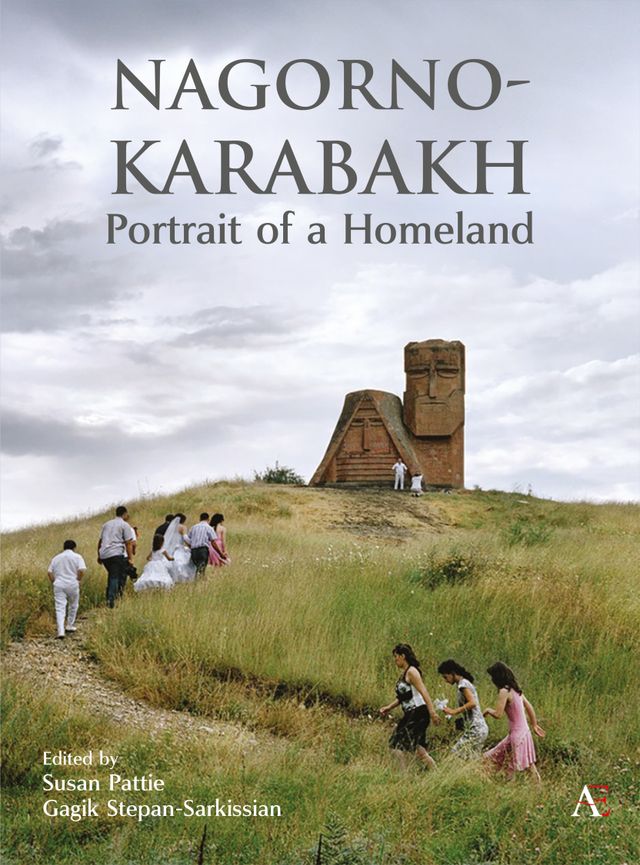


Edited by Susan Pattie and Gagik Stepan-Sarkissian
ISBN: 9781801361309
Pages: 200
Pub Date: November 2026
Imprint: Anthem Editions
Presents the history, culture, and everyday life of Artsakh through photographs and essays, while reflecting on the loss of its Armenian population and the erasure of its cultural heritage after the recent conflict.
Nagorno-Karabakh: Portrait of a Homeland Dating back to the first millennium BCE, the land known as Nagorno-Karabakh (NK) during Soviet times and as Artsakh to Armenians is part of the history of Armenia and Armenians.
Nagorno-Karabakh: Portrait of a Homeland introduces readers to the history, daily life, and creative arts of its people, highlighting historical resilience. In the Soviet era, NK/Artsakh was an enclave within Azerbaijan, struggling to maintain its identity. The people of this land withstood conflicts, adapted, and recovered from oppression over centuries, creating a distinct culture, transforming adversity into growth.
Artsakh and its people emerge through photos, conversations, and essays. Striking images by well-known photographers show magnificent mountains, shimmering lakes and waterfalls, ancient trees, and other flora, wild or sown by loving hands. Daily lives are documented in photos that range from rural life to urban settings, from family gatherings to traditions of faith. A 3,000-year Timeline is included along with maps showing changing borders over time. Contributions by academics, other experts, and people with lived experience of the region form three main sections focusing on History, Daily Life, Arts, and Material Culture. Photographs illustrate varied subjects and also appear as stand-alone images, showing scenic beauty, people at work and play, and the scars of war. A brief introduction to the history of Artsakh is followed by articles focusing on important turning points over millennia. Following sections explore the Artsakh dialect, experiences of belief, and various food and drinking customs. Medieval cross-stones (khachkars), churches, and monasteries are highlighted alongside contemporary graffiti and development of new arts and technology initiatives. Local people speak of their memories of traditions and reflect on how identities were shaped by the land and its history.
The Armenian–Azerbaijani conflict, lasting over three decades, ended with the ethnic cleansing of the people of Artsakh. After losing the war in 2020 and surviving a nine-month blockade in 2022–2023, the people of Artsakh fled to Armenia and beyond, fearing the rule of a hostile state. The current destruction of both material and non-material culture of the area is addressed here not as a polemic but as a sensitive illustration of what has been lost. This book thus ends by returning to issues of human rights and the erasure of culture, hoping to instill hope and find ways of rebuilding where Armenians and Azeris, along with other peoples of the region, respect each other and their heritage.