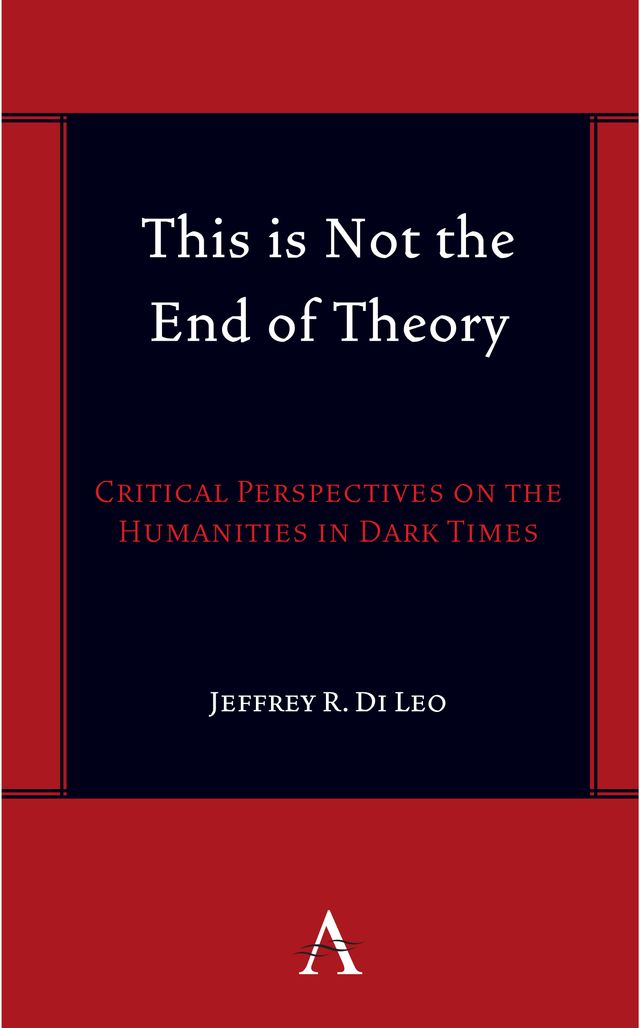


Jeffrey R. Di Leo
ISBN: 9781839999871
Pages: 248
Pub Date: July 2026
Imprint: Anthem Press
Defends the vital role of theory in the humanities, exposing antitheory’s risks and warning against its threats to critical thinking and education.
Antitheory can be and is many things. At its most basic level, it takes the form of opposition to some of the major mandates of theory. For example, there is a faction of antitheory that opposes the use of race, class, gender, and sexuality in the analysis of literature and culture. There is another that rejects critique and calls for forms of criticism that do not involve ideological analysis. There is still another form of antitheory that rejects the epistemological and metaphysical project of structuralism and poststructuralism, and its so-called “social construction of knowledge.” And today, it is also appropriate to term the assault by the far right against diversity, equity, and inclusion in education as a version of antitheory.
Antitheory, writes the novelist Mario Vargas Llosa, “returns sanity and rationality to literary criticism, rescuing it from the esotericism, jargon, and delusions under which it [has] been buried by the ‘theorizers’”—something he feels that “lovers of genuine literature and criticism” desperately desire.
By eliminating theory from the academy, the valiant warriors of antitheory believe that they are saving it from appreciative peril. This Is Not the End of Theory presents a host of arguments against this claim. It demonstrates that the elimination of theory from the academy has quite the opposite effect. Namely, it foreshadows the death of the academy.
This is not the end of theory because our ability to think, interpret, and judge critically depends on it—and a world without theory is one where critical thinking, interpretation, and judgment will soon vanish in the darkness. This Is Not the End of Theory is a warning to all who value critical theory, humanities, and pedagogy to be wary of new directions in antitheory regardless of their source—and to do everything they can to avoid them taking root.