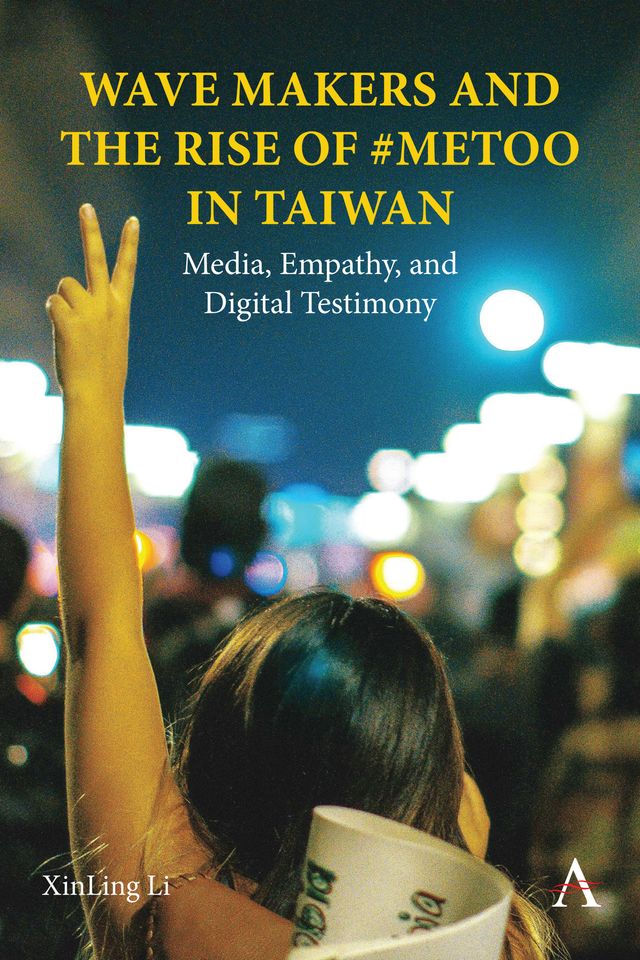


XinLing Li
ISBN: 9781839999789
Pages: 78
Pub Date: September 2026
Imprint: Anthem Press
Analyzes how Taiwan’s #MeToo movement emerged from the Netflix series Wave Makers, showing how fictional storytelling mobilized real survivors and then tracing how the movement spread—and met its limits—through Taiwanese social media.
This book offers a pioneering examination of the #MeToo movement in Taiwan, foregrounding the pivotal role played by the Taiwanese Netflix series Wave Makers in igniting public discourse and social mobilization around sexual violence. Employing frame analysis and sociological theories, the study begins by analyzing the narrative structure, character development, and thematic framing of Wave Makers, with a particular focus on how the series mirrors the lived realities and sociocultural challenges faced by survivors of sexual harassment and assault in Taiwan. Through close textual analysis, it unpacks how the drama articulates issues of workplace power dynamics, institutional silencing, and the emotional toll of disclosure—concerns that deeply resonate within Taiwanese society.
Using psychological and communication theories such as narrative identity and parasocial contact, the book also demonstrates how the storytelling of Wave Makers—specifically the scene “don’t just let it go”—served as a cultural catalyst, transforming fictional moments into a springboard for collective action. It highlights how the series’ emotionally charged narrative and morally grounded protagonists created an empathic framework through which viewers—especially women—could find the language and courage to speak out. In doing so, the book contributes to broader discussions on media influence, showing how cultural productions can foster empathy, shape public consciousness, and inspire acts of resistance.
The rest of the book explores the communication of Taiwan’s #MeToo movement, focusing on how digital testimony emerged as a hybrid form of personal disclosure and public truth-telling that collapses the boundary between the intimate and the political. It also critiques the limits of digital testimony, showing how platform-mediated activism often shifts the call for systemic change toward viral hashtag campaigns centered on public shaming and spectacle. By situating Taiwan’s #MeToo movement within the broader dynamics of the attention economy, the book further examines how digital testimony functions simultaneously as a political intervention and a media commodity. It foregrounds how algorithmic logics privilege voices and narratives already embedded in dominant public discourse, while rendering others less visible or marginal.
By interweaving media analysis with sociopolitical critique, the book offers a nuanced account of how popular culture and digital activism converged to shape Taiwan’s #MeToo movement. This ultimately raises important questions about the durability of social change, the risks of performative justice, and the potential of narrative-driven movements in non-Western contexts.